
Tentative List · Sindh
Port of Banbhore
Status: UNESCO Tentative List (submitted 30 January 2004) · Sindh · criteria (iv)(v)(vi) · UNESCO ref 1885 · also known as Bhambore, and identified with medieval Daybul/Debal and classical Barbarikon.
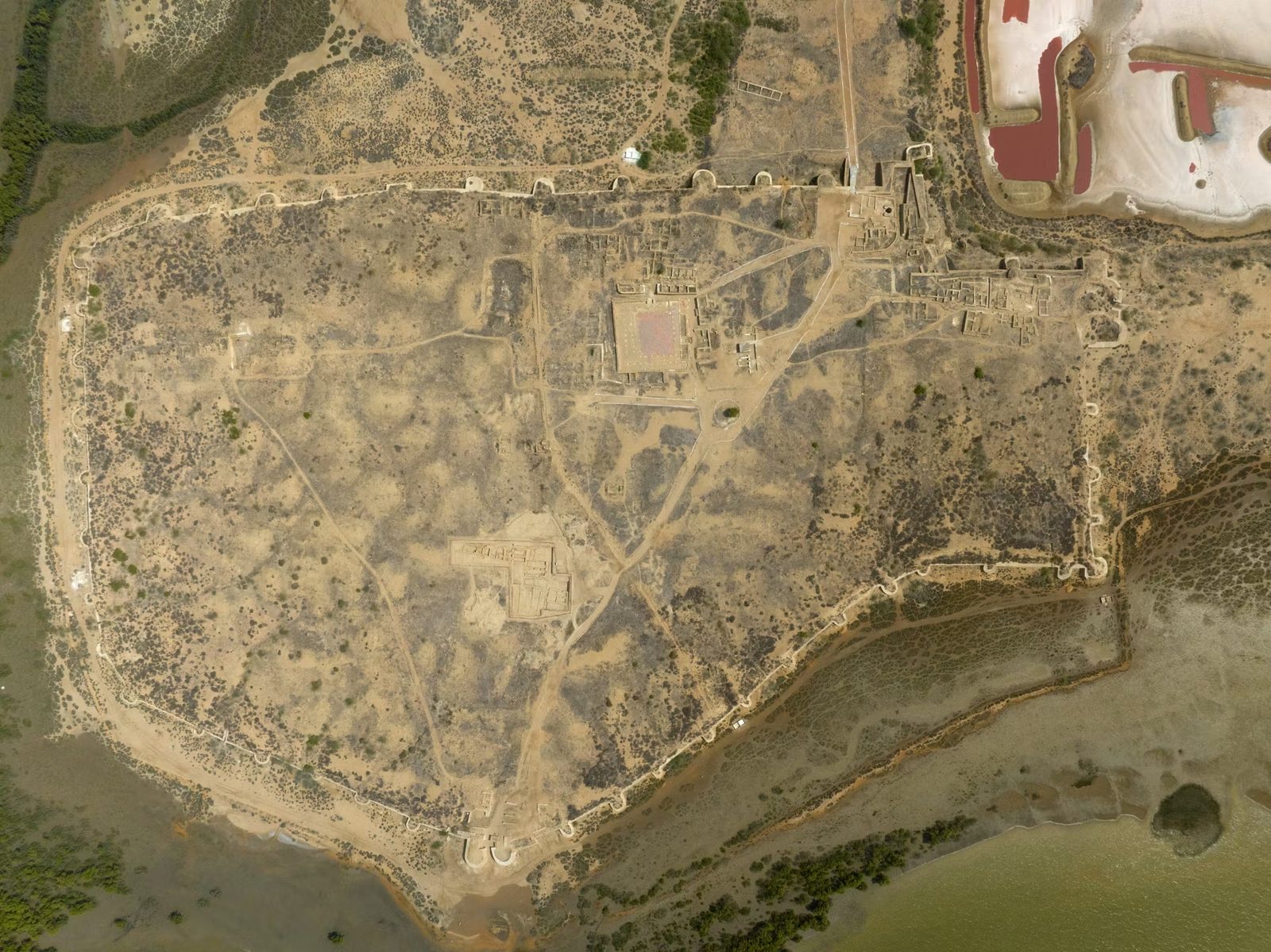
Overview (Verified — published record)
On the northern bank of the Gharo creek in Thatta district, Sindh — about 6 km west of Gharo and some 65 km east of Karachi — lies the ancient port city of Banbhore. Connecting the river with the sea, Banbhore was a node in an international trade network linking the Mediterranean, the Middle East, India, Southeast Asia and China between the 1st century BC and the 13th century AD. Its own identity is still debated: it may be the Barbarikon of the Greek Periplus of the Erythraean Sea, and it is widely identified with Daybul (Debal), the great Indus-mouth port that Arab sources record as conquered by Muhammad bin Qasim in 712 AD.
Archaeological findings (Verified — published record)
Excavations from the 1950s onward (F. A. Khan, 1958–65, and the renewed Pakistani–Italian and Pakistani–French missions from 2010) have revealed residential quarters, markets, workshops, a large congregational mosque — thought by some to be among the earliest in South Asia — a Shiva temple with a lingam-yoni assembly to the west of the city, and a port frontage on the creek. Houses were arranged around central courtyards on a grid of streets, and a north–south partition wall built in the city's final phase appears to have separated wealthier quarters — together implying a central planning authority. Archaeologists identify three stacked occupation levels: the Islamic (Umayyad and Abbasid, 8th–13th c.) nearest the surface, the Hindu-Sassanian (3rd–7th c. AD) below it, and the Scytho-Parthian (1st c. BC – 2nd c. AD) at the base.
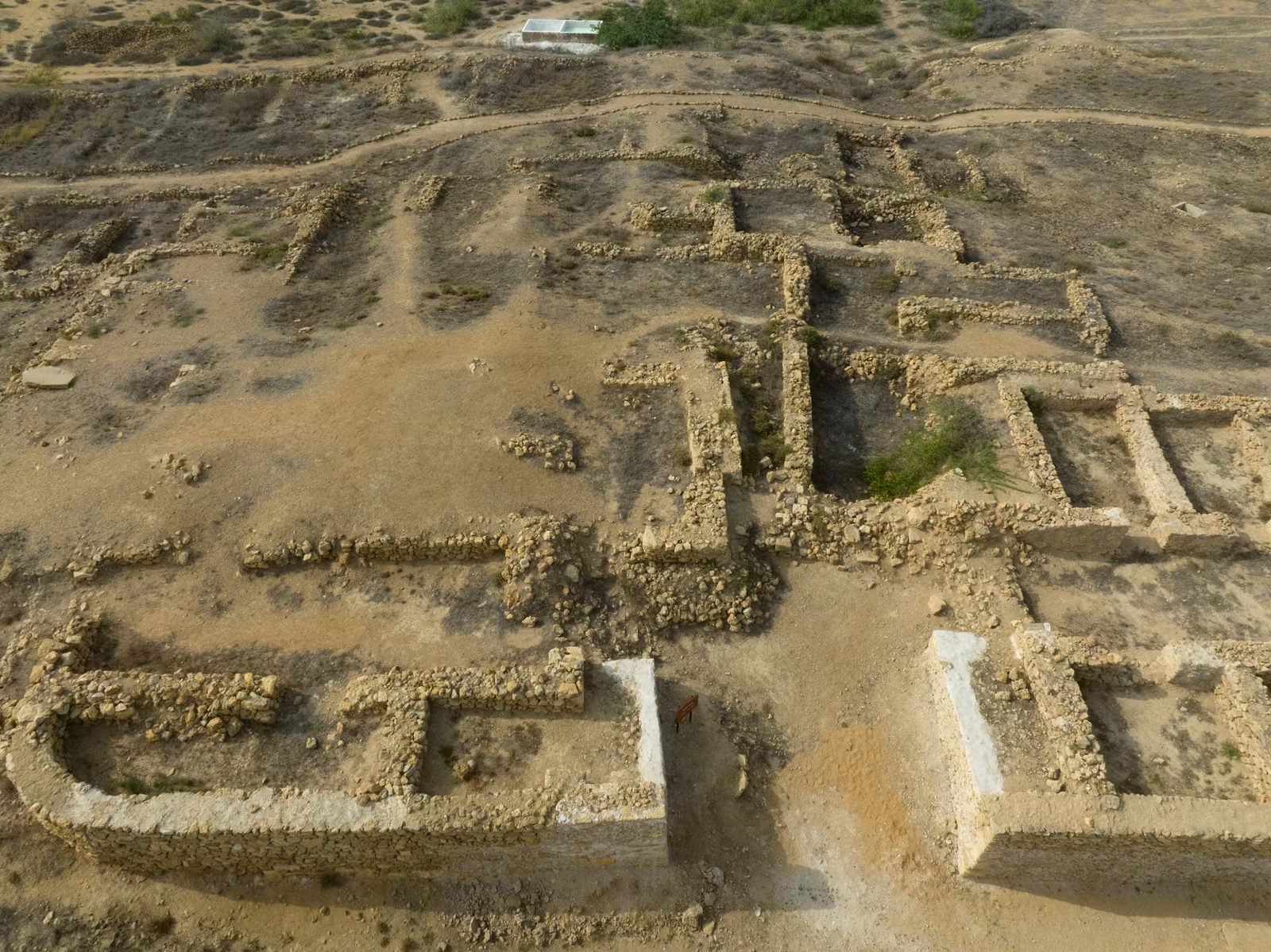
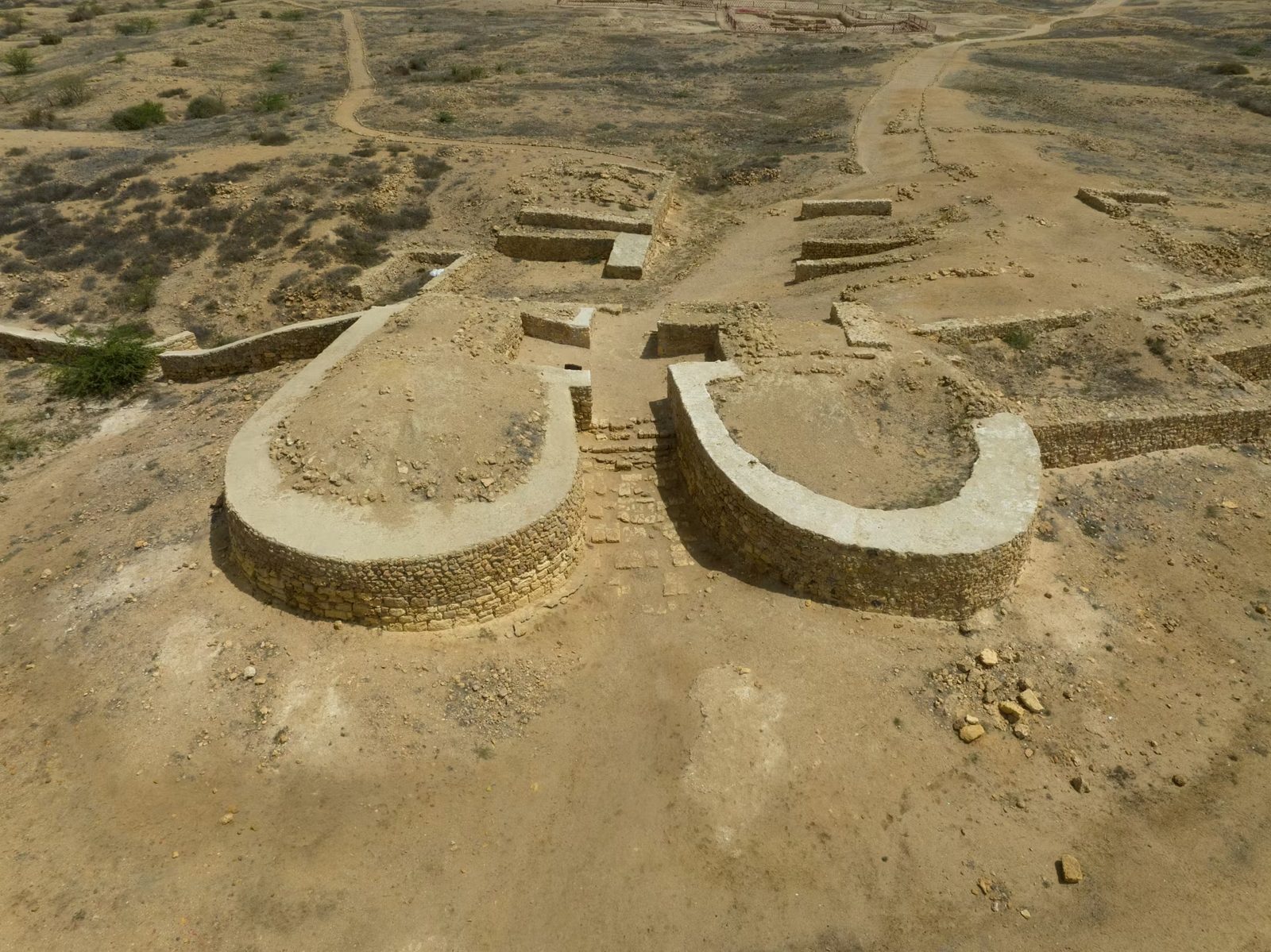
Artefacts & the ivory workshop (Verified — published record)
Terracotta moulds from the city's last phase point to local copper-coin production. Excavations from 2020 uncovered the remains of an ivory workshop in the fortified citadel dating to the later Islamic period (12th–13th c.). Published reports from the Pakistani–Italian mission describe it as "the only ivory workshop known in the archaeological record worldwide," yielding the most abundant recovery of ivory artefacts ever from a single archaeological context (Fiorani, 2021). Kufic inscriptions on stone slabs were found near the mosque, and large earthenware jars — possibly for dyeing and washing — echo the crafts named in local folklore.
Folklore: Sassui and Punnhun (Cultural context)
Banbhore is the setting of one of Sindh's great love stories. In Shah Abdul Latif Bhittai's 18th-century Shah Jo Risalo — written some five centuries after the city was abandoned — Banbhore is the birthplace of Sassui, raised by a washerman, who falls in love with Punnhun, a prince of Balochistan. The tale's references to thread-weaving, washing and dyeing are read by some historians as a memory of the port's real crafts; the 2020 discovery of dyeing jars gave the folklore an archaeological echo.
Decline (Verified — published record)
Like other Indus-delta cities, Banbhore declined in the 13th century as the Indus shifted course, cutting the commercial lifeline that made the port viable. Its artefacts matter not only for the history of Sindh but for the wider Indian Ocean world in which it was an important node; much remains to be done, especially maritime archaeology of the drowned frontage.
Listing status (Verified — UNESCO)
Banbhore has been on Pakistan's UNESCO Tentative List since 30 January 2004 (reference 1885). In July 2025 the Government of Pakistan named the Port of Banbhore among five sites proposed for nomination to the World Heritage List. Tentative-List status and a nomination proposal are prerequisites for examination — they are not inscription, which would require a Committee decision at a future session.
PWHI position (PWHI analysis)
Priorities for advancement: a management plan, defined boundaries and a buffer zone, comparative analysis, and a documented Statement of Outstanding Universal Value — supported by the maritime archaeology the site still lacks. PWHI backs a credible, evidence-based nomination and cautions against presenting Tentative-List status or a nomination proposal as inscription. As a coastal, low-lying delta site, Banbhore is also exposed to sea-level rise, creek erosion and salinity — a candidate for the ecosystem's climate-and-resilience monitoring.
Explore
Open the Atlas record (Site ID 5512) →
Sources
- UNESCO Tentative List record 1885: https://whc.unesco.org/en/tentativelists/1885/
- "Banbhore," Lost Cities of the Indus Delta (MaritimEA Research): https://lostcitiesofthedelta.org/banbhore/ — archaeological narrative, folklore, and field imagery.
- F. A. Khan, Banbhore (Department of Archaeology, 1960); Fiorani & the Pakistani–Italian mission reports (2021); M. R. Mughal, The Antiquities of Banbhore (2024).
- Government of Pakistan five-site nomination announcement, July 2025 (press).
- PWHI editorial analysis is labelled as such.