
The six World Heritage properties
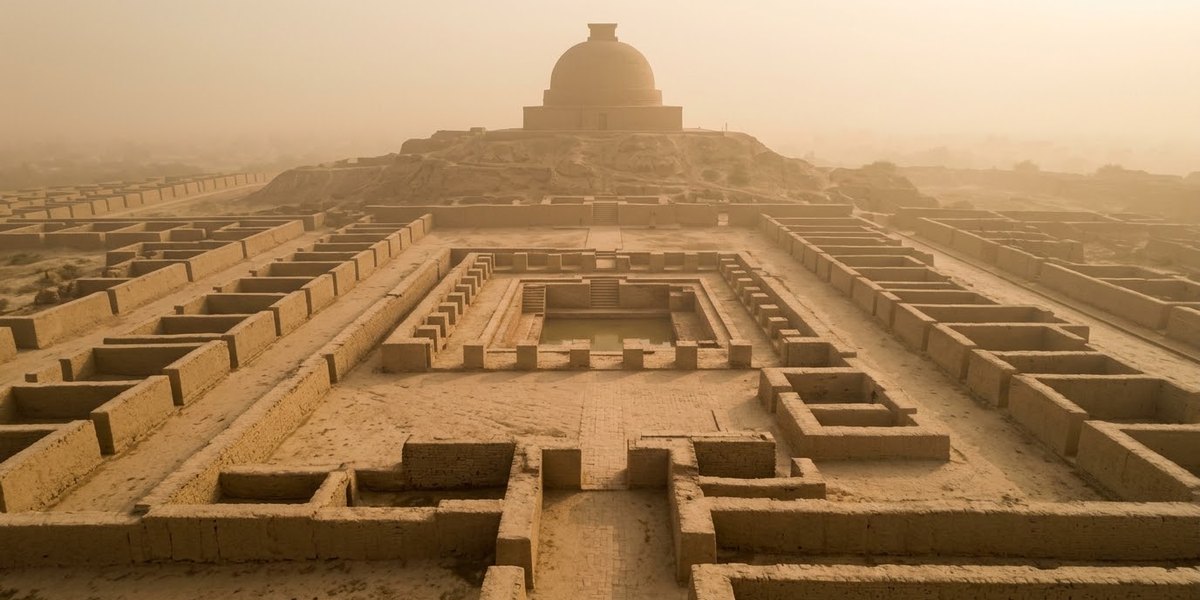
Archaeological Ruins at Moenjodaro
UNESCO inscribed: 1980Protected: Antiquities Act 1975Moenjodaro represents the pinnacle of Bronze Age urbanism in the Indus Valley, dating from the mid-3rd millennium BCE. The site is split into a fortified Citadel mound and a lower town laid out along a strict orthogonal street grid network. Built entirely of standardized baked bricks conforming to a precise 1:2:4 ratio, Moenjodaro features advanced public works including subterranean covered street drains, private household baths, and the monumental communal Great Bath basin lined with bitumen to prevent water leakage.
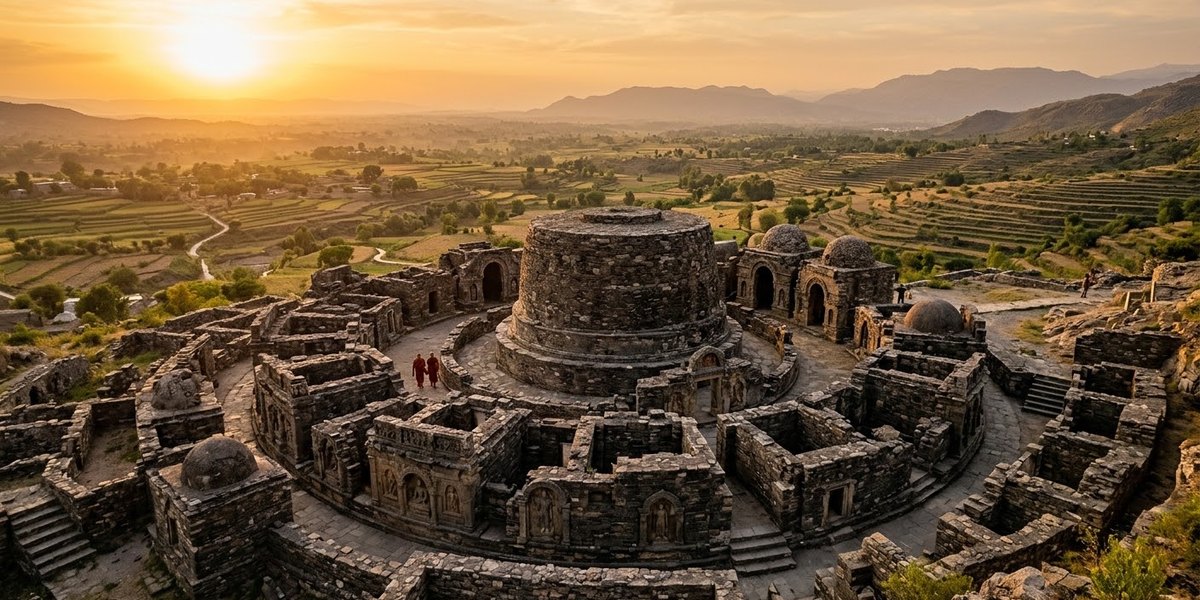
Archaeological Ruins of Taxila
UNESCO inscribed: 1980Protected: Antiquities Act 1975Taxila preserves a thousand-year urban sequence documenting the crossroads of South Asian, Persian, and Mediterranean civilizations. The site encompasses three distinct successive city settlements: Bhir Mound, the cardinally aligned Greek-style grid city of Sirkap, and the stone-walled Kushan metropolis of Sirsukh. Key architectural highlights include the Jandial Temple with classical Greek Ionic column capitals and the Shrine of the Double-Headed Eagle, alongside sprawling Buddhist monasteries like Dharmarajika and Bhamala.
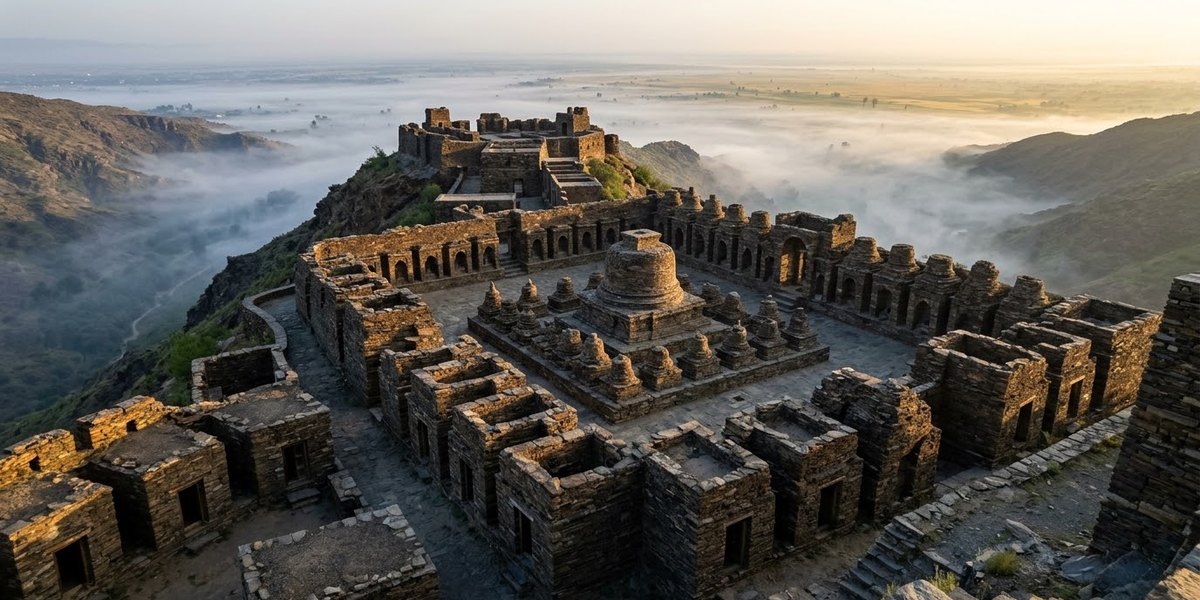
Buddhist Ruins of Takht-i-Bahi and Sahr-i-Bahlol
UNESCO inscribed: 1980Protected: KP Antiquities Act 2016Perched on a mountain crest in Mardan, the monastic complex of Takht-i-Bahi is one of the most complete and well-preserved Buddhist sanctuaries in Gandhara. Built of local dark limestone masonry, the monastery is terraced across different levels to house a central court of stupas, vaulted monk cells, and cool underground meditation vaults designed for quiet reflection. The monastery relied on a symbiotic relationship with the nearby fortified residential city of Sahr-i-Bahlol in the fertile agricultural plains below.
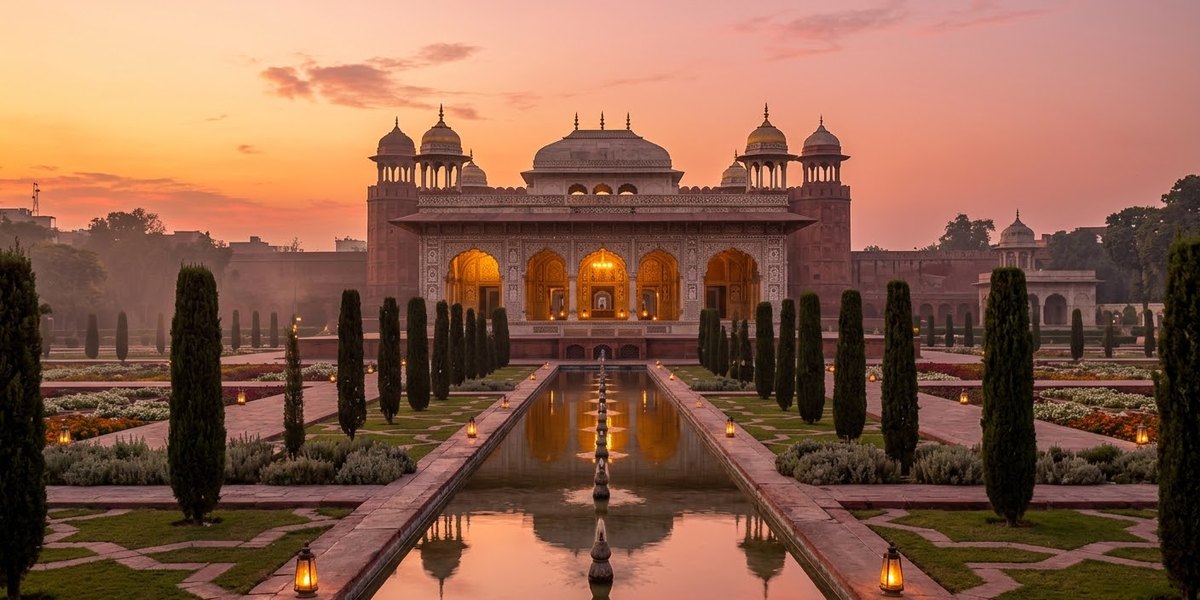
Fort and Shalimar Gardens in Lahore
UNESCO inscribed: 1981Protected: Punjab Special Premises Ordinance 1985This property combines the royal defensive bastion of Lahore Fort with the three-stage descending terraces of Shalimar Gardens, showcasing the absolute height of Mughal artistic and engineering mastery. The Lahore Fort contains Akbar's thick brick fortifications, Jahangir's court architecture, and Shah Jahan's white marble Shish Mahal. The Shalimar Gardens, built by Shah Jahan in 1642, features an elaborate, gravity-fed hydraulic network of 410 fountains feeding sandstone canals and reflecting pools across three symmetrical terraces.
Historical Monuments at Makli, Thatta
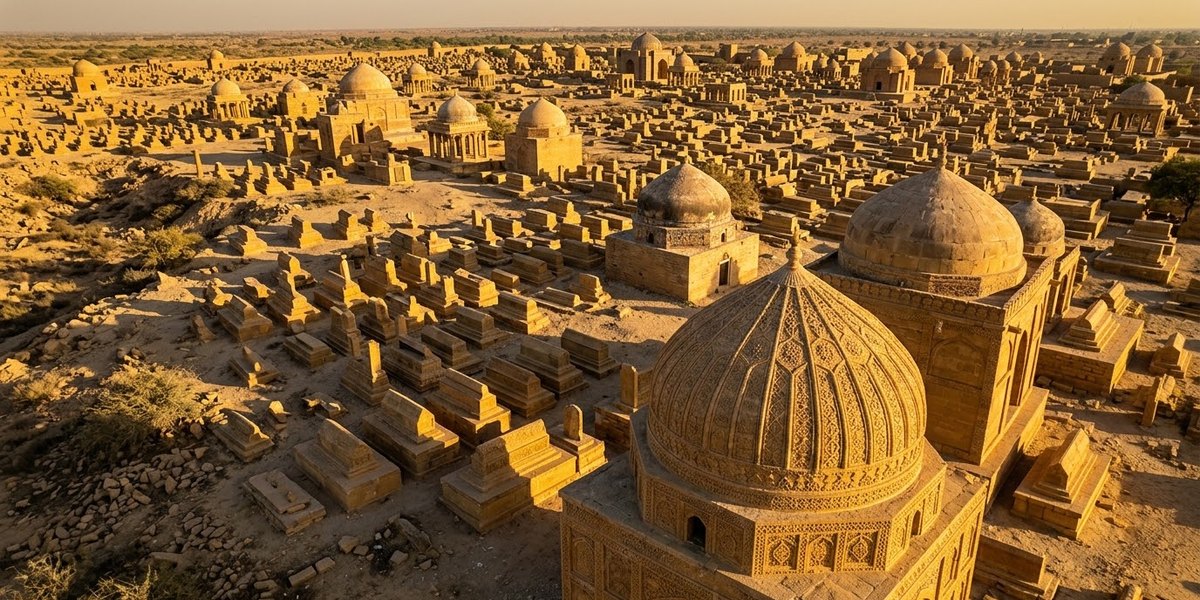
UNESCO inscribed: 1981Protected: Sindh Cultural Heritage Act 1994Spanning over 1,000 acres, the massive necropolis of Makli is one of the largest funerary landscapes in the world, holding approximately half a million graves. The site contains the monumental yellow sandstone tombs of Samma, Arghun, Tarkhan, and Mughal-era rulers. Makli is celebrated for its exquisite, lace-like low-relief stone carvings featuring geometric star lattices and floral patterns cut deeply into sandstone walls, alongside vibrant cobalt-blue glazed tilework that documents centuries of changing regional dynastic design.
Rohtas Fort, Jhelum
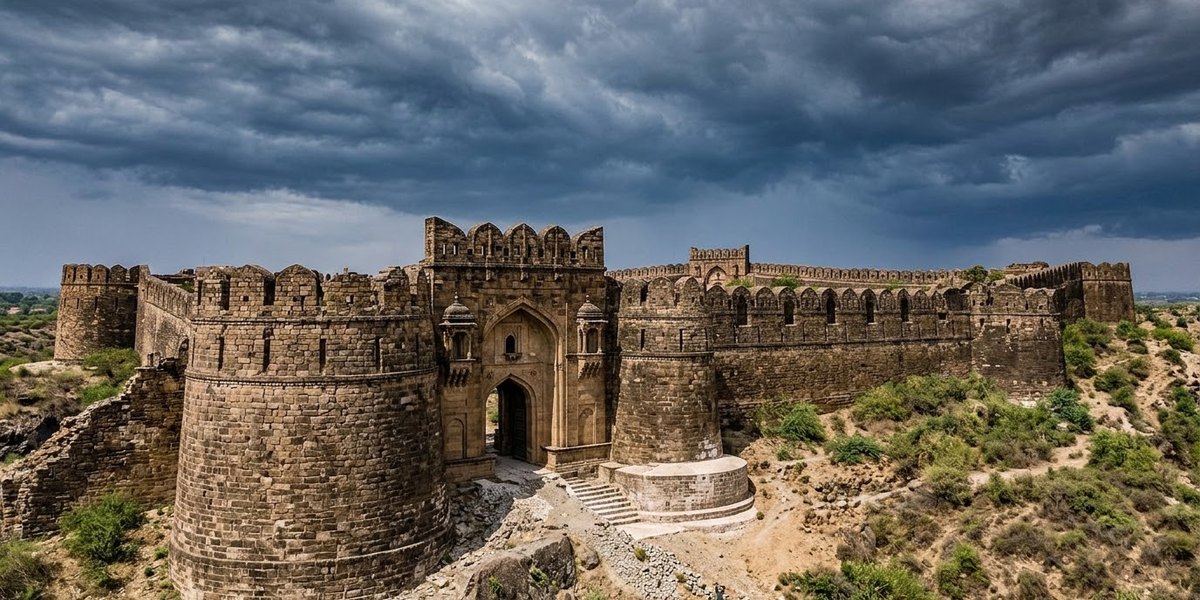
UNESCO inscribed: 1997Protected: Antiquities Act 1975Rohtas Fort is an exceptional, unconquered example of early Islamic military architecture in Central and South Asia, commissioned by Sher Shah Suri in 1541. Nestled along the rugged Potohar Plateau, the fortress features a massive 4-kilometer sandstone perimeter wall, reinforced by 68 semi-circular defensive bastions and 12 monumental gates—such as the majestic, carved Sohail Gate. Designed to control the strategic Grand Trunk Road and local Gakkhar tribes, the fort's robust layout served as a model for later Mughal military fortifications.