
Tentative List · Balochistan · coast-desert cultural landscape
Hingol Cultural Landscape
Status: UNESCO Tentative List (submitted 2016) · Balochistan · criteria (iii)(vi) · UNESCO ref 6109 · a coupled natural–cultural landscape within Hingol National Park, Pakistan's largest.
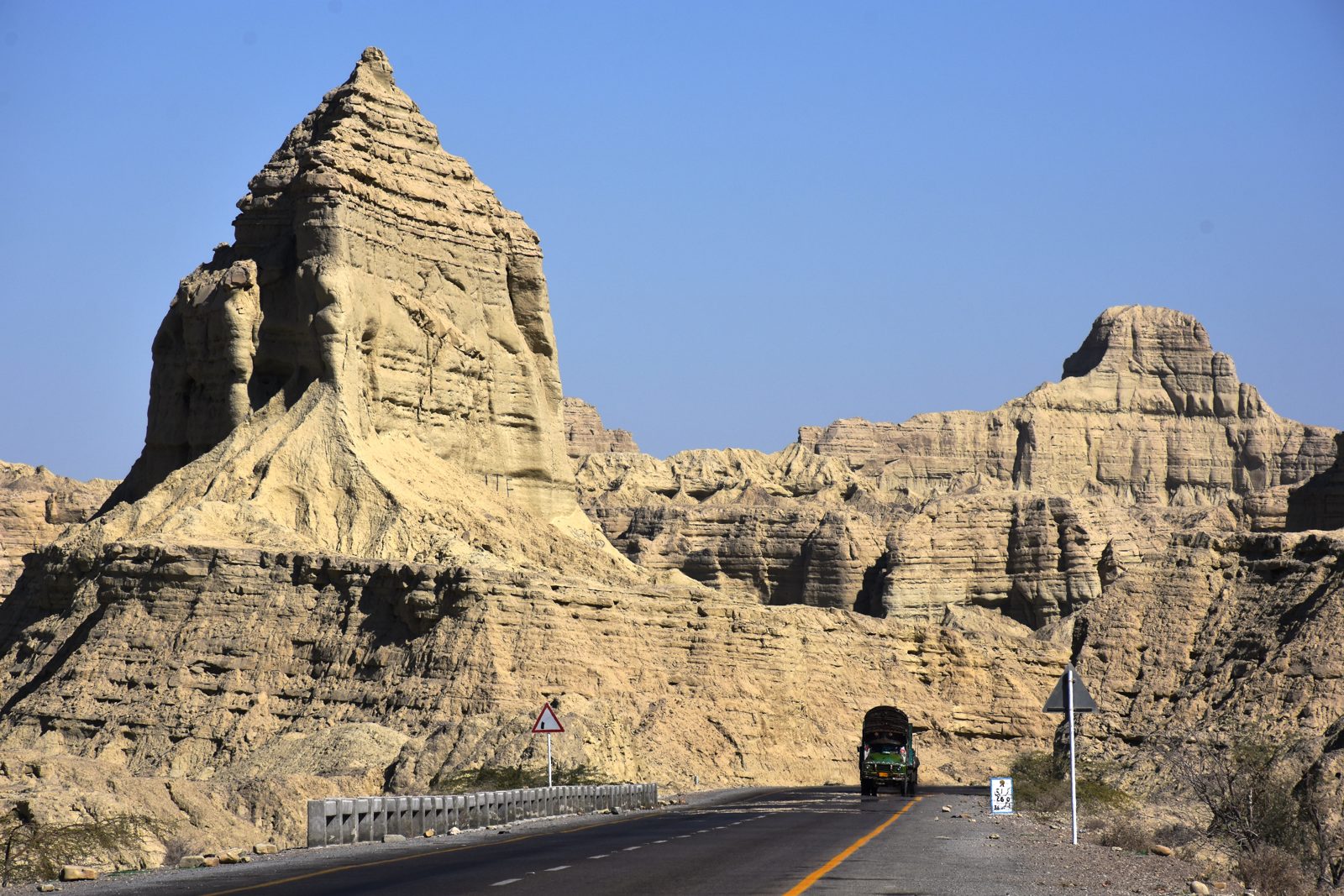
Overview (Verified — public record)
Hingol is a vast expanse of Balochistan coast and badlands in Lasbela district, where the Hingol River meets the Arabian Sea. As Hingol National Park it is by several measures Pakistan's largest national park, and it is one of the country's most surreal landscapes: wind-carved mud mountains, the towering natural rock sculpture known as the Princess of Hope, the Chandragup mud volcanoes sacred to Hindu pilgrims, and a wildlife refuge for Sindh ibex, urial and chinkara gazelle. The Makran Coastal Highway runs straight through its heart, making it the most accessible wild landscape from Karachi — about 190 km west, a three-to-four-hour drive.
A landscape like no other (Verified — public record)
Hingol's badlands look almost lunar — ridges and pinnacles of pale, wind-eroded mud stretching to the horizon, sculpted into shapes travellers have named, most famously the Princess of Hope, a slender natural figure, and the nearby "Sphinx." The Hingol River cuts a green gorge through the desert before reaching the sea, and the coastline runs on past Kund Malir beach into the wider Makran.
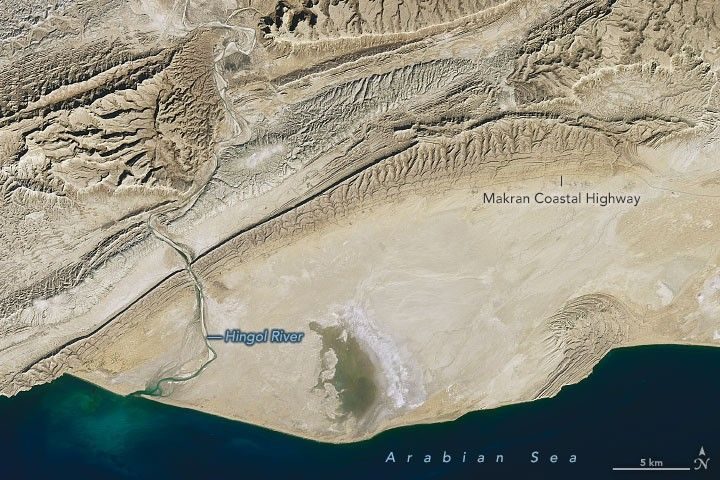
Sacred ground (Cultural context)
The park holds two of the most important Hindu pilgrimage sites in Pakistan: the Hinglaj Mata temple, set in a cave in the river gorge, and the Chandragup mud volcanoes, which pilgrims climb to make an offering to the deity before continuing to the shrine. The annual Hinglaj Yatra draws thousands and is among the largest Hindu gatherings in the country — the living cultural core that makes Hingol a cultural landscape, not only a natural one.
Wildlife and the coast (Verified — public record)
Hingol protects healthy populations of Sindh ibex and urial on its crags, chinkara gazelle on its plains, and marine turtles on its beaches; the elusive Balochistan leopard is occasionally rumoured. Combining badlands, mud volcanoes and a beach stop makes Hingol one of the most varied day-trips in Pakistan — and one of the strongest cases in the country for a mixed natural–cultural World Heritage property.
Listing status (Verified — UNESCO)
Hingol is on Pakistan's UNESCO Tentative List (submitted 2016, reference 6109). Inclusion on the Tentative List is a prerequisite for any future nomination — it is not inscription. Pakistan currently has no inscribed natural or mixed World Heritage property; Hingol, alongside the northern parks and Nagarparkar, is among the leading candidates to change that.
PWHI position (PWHI analysis)
Priorities for advancement: a management plan reconciling pilgrimage, tourism and conservation; defined boundaries and a buffer zone; comparative analysis; and a documented Statement of Outstanding Universal Value spanning both the natural criteria (geology, geomorphology, biodiversity) and the cultural (the Hinglaj pilgrimage tradition). PWHI notes specific pressures: highway-corridor development and traffic through the park, unmanaged visitor growth at the Princess of Hope and Kund Malir, and coastal-erosion and climate exposure along a low, arid shore. PWHI supports a credible, evidence-based nomination and cautions against presenting Tentative-List status as inscription.
Explore
Open the Atlas record for Hinglaj Mata / Nani Mandir (Site ID 9186) →
Sources
- UNESCO Tentative List record 6109: https://whc.unesco.org/en/tentativelists/6109/
- "Hingol National Park," Green Tourism Pakistan field guide: https://greenpaktourism.com/places/hingol-national-park — landscape, pilgrimage, wildlife and access.
- NASA Earth Observatory, Hingol River / Makran coast (Landsat OLI imagery).
- PWHI editorial analysis is labelled as such.